8.20.26 I WHAT ARE YOU GOING TO DO MRS. VARNER?
In 2020, a racist and sexist online attack drove a community built around openness out of public view. Six years later, the community keeps the doors open.
On the evening of April 22, 2020, people gathered in front of their computers for something the first weeks of the pandemic had made suddenly precious: community connection. That night, we came together to breathe, move, and feel some measure of togetherness in a time defined by uncertainty and isolation.
Then the haters arrived. Loud music shook our speakers. Racist and sexist slurs cut through the noise. Pornographic images flooded our screens. Hundreds of people stormed a gathering that, moments earlier, had offered refuge.
Then came the question.
“What are you going to do, Mrs. Varner?”
Again.
“What are you going to do, Mrs. Varner?”
Again and again, the same question. The attackers synchronized the question with a rotating barrage of violent language and obscene images.
“What are you going to do, Mrs. Varner?”
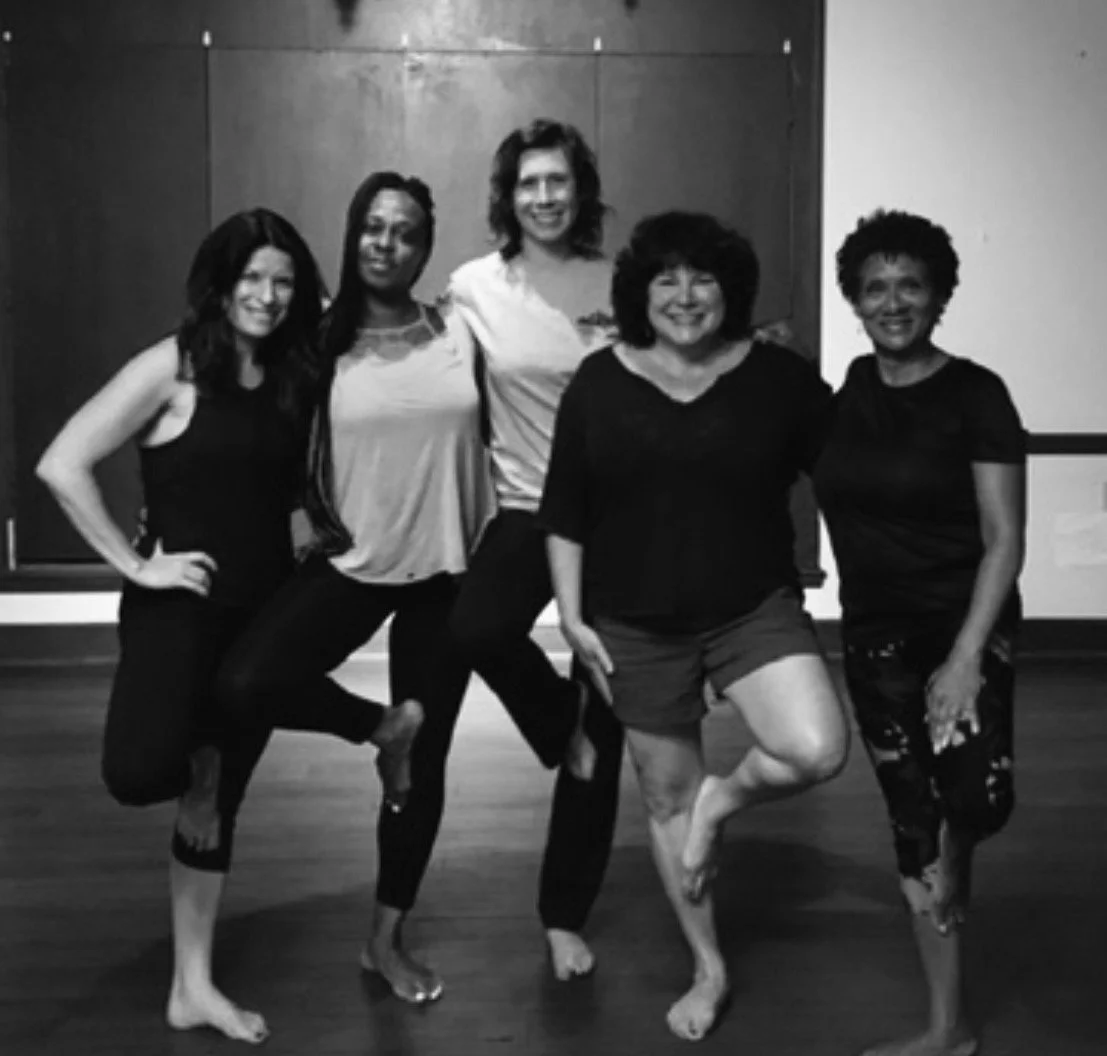
Mrs. Varner was me. And I had no idea how they knew my name. I wasn't even teaching yoga that evening. My friend Andrea Brown was leading the movement and mindfulness practice. At the time, five of us rotated facilitating free Wednesday evening yoga sessions. Andrea and I happened to be in the same physical space that night. She guided the practice. I handled the technology.
I thought I had secured the meeting. A password was required. The waiting room was enabled. Mute controls were on.
None of it mattered.
As the abuse continued, I fought for control of the meeting. Clicking through commands, I tried to silence the haters, remove them, disable their access, shut everything down. They moved faster than me. The music kept blasting. The slurs kept coming. Pornography kept filling the screens.
And over it all, the question: “What are you going to do, Mrs. Varner?”
Finally, after many attempts, the “End Meeting” command worked. The voices disappeared. The screen went dark. The repeating question stopped.
Andrea and I had a decision to make. We could call it a night. No one would have questioned that move. Or we could try again. We chose to try again.
I set-up a new virtual meeting space and sent the access link privately to our family, friends, and regular practitioners who had just experienced the attack. We returned. We breathed. We moved. We recovered some of the connection the haters had ripped apart.
That lasted for about ten minutes. Then they found us again. This time, the attack was worse.
Violent sexual images and videos covered the screens. Masked faces appeared and disappeared. Noisy voices piled on top of one another in a torrent of racist abuse. The hate came rushing back into the space. And so did the question. “What are you going to do, Mrs. Varner?”
I went back to the controls. Mute. Remove. Disable. End Meeting. Nothing worked. The controls were frozen. No matter how many times I clicked, I could not end the meeting for everyone. Somehow, the attackers had followed us into the new space and seized control. And whoever these haters were knew I was trying to stop them - and failing.
“What are you going to do, Mrs. Varner?”
I didn't know what to do. I didn't know how to stop the haters who took control of the technology connecting us. I watched everyone in that space endure something I had invited them into, and I felt sick about it. I felt angry - and painfully naive.
Until that night, I had thought of openness almost entirely as a virtue. Open the door. Invite people in. Remove the price of admission. Don't decide who belongs before they arrive. Trust that when you offer something freely, people will recognize the spirit of the offering and meet it with some measure of care.
That view wasn't incidental to my view of community yoga. It was the point. We offered yoga, meditation, and mindfulness practices without money deciding who could participate. No one had to prove they belonged to practice with us. Everyone was welcome. We kept the door open on purpose.
Then someone used that open door to hurt us. The people who targeted us didn't have to break in. They entered through an opening we deliberately created. They took the open invitation itself and turned it into a weapon against us.
That broke my heart. And left me with the question: “What are you going to do, Mrs. Varner?”
For a long time afterward, my mind would offer up variations of this question: “What do I do when an open door admits hatred? What do I do when welcome is met with abuse? What do I do when the very thing that makes real community possible also makes it easier to harm?”
I didn't have good answers. I did what fear and uncertainty often push us to do. I made things smaller. I became careful about who could find us. I guarded invitations. I paid attention to who knew what, when they knew it, and how they found out.
We didn't stop practicing yoga together. We didn't stop building relationships. But we did go underground.
We closed the open door and drew the circle closer. At that time, retreat felt like wisdom. I had learned something brutal about vulnerability, and a tighter circle offered a responsible response. We practiced among people who knew one another or were connected by someone we trusted. There was no easy way for a stranger to wander in. And in its own way, it was beautiful. The gatherings felt intimate and tender, shaped by friendship as much as by practice. We knew who was in the room. We knew about one another’s lives. We exhaled.
But something essential had changed. The smallness that was protecting us from something, was also keeping us from someone. Someone looking for community. Someone who couldn't afford typical yoga studio prices. Someone who assumed yoga wasn't meant for them. Someone lonely. Someone curious. Caution had a cost.
For a long time, I carried the haters’ question with me: “What are you going to do, Mrs. Varner?” I turned it over and over, as though the responsibility for what came next belonged to me. I thought I needed to figure how open we could afford to be, how much risk we could tolerate, when to welcome, and when to close the door.
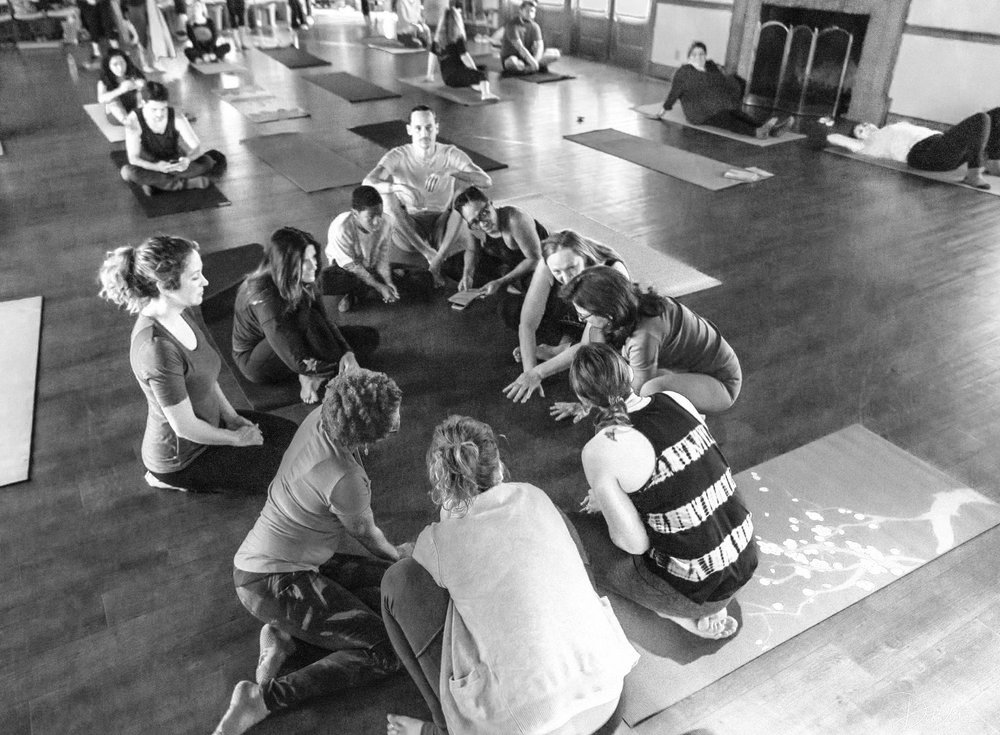
But community yoga was never mine to protect. It was never mine at all. Five of us facilitated those Wednesday evening practices. People returned week after week to breathe and move alongside one another. They remembered names. They noticed when someone was missing. They helped create the warmth and trust that made a collection of people feel like a community. And they had been there that night, too. They had experienced the violation, the fear, the sudden loss of a space we had believed was big enough to leave open.
Whatever came next belonged to all of us. The attackers had the question wrong. It wasn't, “What are you going to do, Mrs. Varner?” Rather, it was, “What are we going to do - together?”
So we talked. We talked about passwords, waiting rooms, and technology. But the more important conversations were about one another. How did we feel? What had changed for us? What did each of us need in order to keep gathering? What risks were we willing to take? We listened to our different answers.
The same attack had happened to all of us, but it didn’t affect us all in the same way. Some of us wanted more protection. Others of us worried that too much protection would cost us the openness that had brought us together in the first place. Neither response was right or wrong. We did not expect everyone to feel the same. The most important thing became staying in relationship while we figured out how to move forward - together.
Those of us who facilitated classes learned to hold responsibility differently. No one person would decide for everyone else what safety required. We would pay attention together. We would respond together. We would keep asking what allowed us to protect one another without letting fear become the architect of community.
To me this was as much a yoga practice as anything we had been practicing on a yoga mat. We were practicing how to remain connected after something had tried to divide us. How to listen when our needs differed. How to share responsibility instead of handing it to one person. How to make decisions as a community rather than for one.
Maybe that was the answer the haters never imagined. They kept asking what I was going to do. Together we answered by becoming more fully we.
Six years later, Community Yoga Center still carries this understanding. We make agreements together about how we share space and how we treat one another. We pay attention to who is in the room, who may need support, and who will respond when something doesn't feel right. We do not assume that welcome means the absence of boundaries, or that safety comes from closing ourselves off. The responsibility belongs to the collective. And so does the care.
We have learned that openness and protection do not have to be opposites. A community can have boundaries without becoming a fortress. We can take care with the doorway without forgetting why we opened it in the first place. And we keep opening it.
We offer the practice freely. We welcome the person we have known for years and the person whose name we do not yet know. We try to make room for familiarity and uncertainty, friendship and newness, belonging and the possibility of belonging. There is risk in that choice. But there is risk in closing ourselves off, too. Draw the circle tightly enough and the person searching for it cannot enter. Draw it tighter still and, eventually, we may protect the circle so completely that we lose the very thing we were trying to protect.
So we keep tending the boundary. And we keep making room. Together.
The doors are open. Come on in.
We create this together.