

“Self-discovery is not achieved by looking out of the corner of your eye to see if everybody else is getting the same results as you or by trying to find out what others have already discovered. It is achieved by going down into one’s own inner, secret place and asking there for a direct encounter with the world, independent of convention.”
The WAY we practice and share YOGA IS ROOTED IN THE TEACHINGS SHARED BY THESE VISIONARY YOGIS.
The history of yoga is messy, missing parts, and still being sorted. It’s core concepts and practices developed non-linearly over thousands of years by different groups of spiritual radicals who rejected religious dogma and power centers to occupy a more liminal space of spiritual transformation. Yoga is linked with at least ten major cultural movements and continues to transform and adapt to meet the unique and changing needs of the time.
Countless luminaries - from ancient sages to modern innovators - have left indelible marks on how we practice and share yoga today. The concepts shared at Community Yoga Center are based on the teachings of key historical yoga influencers, including Abhinava Gupta (c.975), Sri Ramakrishna (c.1850), Swami Vivekananda (c.1880), Swami Yogananda (c.1920), Sri Aurobindo and the Mother (c.1920), Sri Ramana Maharshi (c.1920), Tirumalai Krishnamacharya (c.1920), Anandamayi Ma (c.1920), and Jiddu Krishnamurti (c.1950). These visionary yogis have explored yoga in ways that offer profound insights into the nature of existence. The yoga we practice and share today wouldn’t be possible without these influential teachers. Understanding the legacy of these yogis not only honors yoga’s roots, but also shapes how yoga evolves.
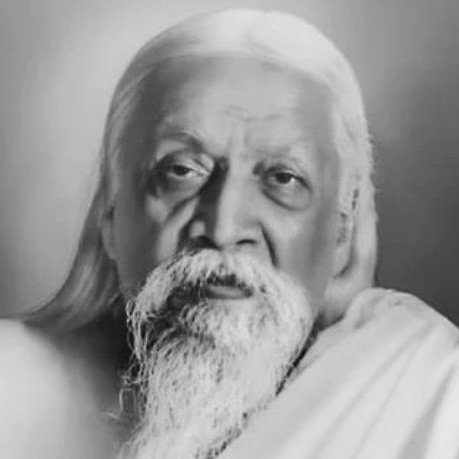
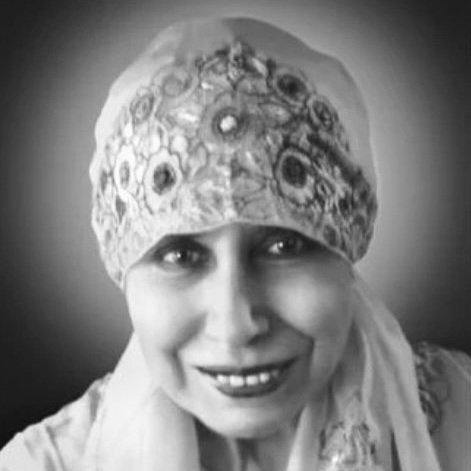

SRI AUROBINDO
Sri Aurobindo was a political radical, revolutionary mystic, and one of the greatest yogic philosophers ever. He wrote prolifically and poetically about yoga and the potential for spiritual evolution.
Sri Aurobindo was a political radical, revolutionary mystic, and one of the greatest yogic philosophers ever. He wrote prolifically and poetically about yoga and the potential for spiritual evolution.
Aurobindo was born in Kolkata, India on August 15, 1872, but spent his formative years in the United Kingdom immersed in Western ways of living. Returning to India as a young adult, he worked as a government administrator and college professor. In the early stages of the Indian independence movement, Aurobindo was a fierce anti-colonial activist. Aurobindo’s younger brother, Barin, was also an Indian freedom-fighter. Both men were incarcerated in 1908 for sedition and treason against the British government.
While in prison, Aurobindo experienced profound spiritual revelations. Having a felt sense of consciousness pervading all, he experienced himself as part of an indivisible reality. He viscerally perceived his own non-separateness from all and began to feel the divinity in everyone and everything.
His spiritual transformation prompted him to cease his political activism and follow his heart in the exploration of yoga. In 1910, Aurobindo moved to Punducherry, India, to learn, practice, and live yoga in earnest. The same revolutionary impulse that drove his effort to free the Indian people from oppression fueled his desire to free himself from the subjugation of his own humanness. With intense self-discipline Aurobindo began to explore the mystery of human nature through the experiential practice of yoga. He made himself the subject of the experiments and recorded his yoga experiences like a scientist in an effort to understand the process of embodied consciousness.
Aurobindo attracted spiritual seekers who learned and found inspiration from Aurobindo’s yoga practice. One of those seekers was Mirra Alfassa, a French mystic who visited Punducherry in 1914. She became Aurobindo’s greatest collaborator. With great affection he referred to her as “the Mother” and described the two of them as “one soul in two bodies.” Together they established an ashram in 1926 with the view that "All life is Yoga.” The Mother organized the spiritual community while Aurobindo increasingly retreated to practice yoga and write.
For over two decades Aurobindo developed, practiced, and taught a form of integral yoga that synthesized centuries of yoga concepts. He emphasized movement from contracted consciousness that feels separate from everyone and everything to an expansive consciousness that feels connected with all. For Aurobindo, yoga was not a set of prescriptive practices, but instead an existential, experiential, and experimental process unique to each individual that fostered sustained insight of consciousness as one and infinite.
On December 5, 1950, Aurobindo passed on, after physically ailing from kidney disease and uremia. The Mother continued to share the teachings of integral yoga until her death of a heart attack at age 95 on November 17, 1973.

SRI RAMAKRISHNA
Sri Ramakrishna is one of the greatest yogis and mystics of all time. He was adept at deifying the world - at recognizing God alone as real and dwelling in everyone and everything. His whole life was centered around continuous contemplation and experience of divine mystery,
Sri Ramakrishna is one of the greatest yogis and mystics of all time. He was adept at deifying the world - at recognizing the divine dwelling in everyone and everything. His life was centered around continuous contemplation and experience of divine mystery, consistently giving up the illusion of materiality for the truth of the unknown. He was known for his sincere devotion and love for the Goddess Kali.
Ramakrishna was born in West Bengal, India on February 18, 1836. His father, Khudiram Chatterjee, and mother, Chandramani Devi, were loving individuals of great ethics and integrity. As a young boy, Ramakrishna reveled in the beauty of nature and delighted in myths about gods and goddesses. He created art around stories of epic heroes and heroines, including drawings, clay sculptures, dramatic performances, and devotional music. Throughout his youth, he possessed a mystical attitude, deeply revering Life itself. He also demonstrated great courage and rebellious spirit of independence.
After the death of Ramakrishna’s father in 1843, his older brother Ramkumar, established a Sanskrit school in Kolkata and later served as a priest in the Dakshineswar Kali Temple in West Bengal. Ramakrishna came to the temple around 1855 to assist Ramkumar in the daily rituals. In 1956, Ramkumar died, leaving Ramakrishna to take over the position of head priest.
Ramakrishna became obsessed in the worship of Kali and began desperately begging Kali to reveal herself to him. He spent his days and nights in ongoing prayer, song, and meditation devoted to Kali - often naked and lacking food and sleep - pleading with Kali to show him a vision of truth. His longing for her vision was extreme and in a moment of unbearable pain at the thought of never having her vision, he contemplated ending his life with a temple sword. As he grabbed the sword, he had a vision: “What I saw, was a boundless infinite conscious sea of light! How far and in whatever direction I looked, I found a continuous succession of effulgent waves coming forward, raging and storming from all sides with a great speed. Very soon they fell on me and made me sink to the unknown bottom. I panted, struggled and fell unconscious. I did not know what happened then in the external world - how that day and the next slipped away. But in my heart of hearts, there was a flowing current of intense bliss, never experienced before, and I had immediate knowledge of the light that was the Mother.” He described the Mother Kali as the absolute - pure existence, knowledge, and bliss - satchitananda - infinite, all-pervading, and consciousness itself.
Out of concern for the destabilizing effects of Ramakrishna’s spiritual practices and visions, Ramakrishna’s mother and brother, Rameswar, began arranging marriage for Ramakrishna. They hoped family duties would steady Ramakrishna mentally and emotionally. Ramakrishna suggested they could find his bride in Sarada Devi, who was five years old, and lived in a neighboring town. In 1859, Ramakrishna was married to Sarada Devi. She was about six years old and he was twenty-three years old. The couple lived separately until Sarada was eighteen years old when she joined Ramakrishna in Dakshineswar. Ramakrishna had already embraced monastic life, and as a result, their marriage was never consummated. Ramakrishna viewed Sarada as the embodiment and incarnation of the Divine Mother and addressed her as Sri Ma. Sarada was an ardent follower of her husband’s meditation and spiritual practices, and over time took up the role of mother to Ramakrishna’s followers with ease.
For Ramakrishna, the purpose of life was God-realization, yet he was never dogmatic about a specific path, emphasizing that God can be realized through several spiritual paths and disciplines so long as there is earnestness. Ramakrishna never taught within a system of philosophical concepts or religious ideology. Rather, he experienced life directly and shared the fullness of his experience. He found that Hinduism, Islam, and Christianity all moved toward realization of the divine using different paths. To him, “God is formless, and God is possessed of form too. And He is also that which transcends both form and formlessness. He alone knows what all He is. . . . God the Absolute and God the Personal are one and the same. Belief in one implies belief in the other.”
One of Ramakrishna’s greatest teaching legacies may be his message about the harmony of religions. For him, all religions are the revelation of God in diverse aspects to satisfy the many aspects of human minds. Each wisdom tradition giving us part of the truth from different standpoints - not contradictory but complementary. Ramakrishna faithfully practiced the spiritual disciplines of different religions and came to realize that they all lead to the same result – communion with God. Harmony of religions is not uniformity, but rather unity in diversity.
In 1885, Ramakrishna was diagnosed with throat cancer. He suffered much physical pain and Sarada tended to Ramakrishna’s needs and took care of his followers who surrounded Ramakrishna during his illness. Ramakrishna endured much physical pain, but late on the night of August 15, 1886, Ramakrishna apparently fell into a deep samadhi. He regained regular consciousness around midnight speaking the name of Kali three times and gently laying down afterward. He is described as entering into mahasamadhi at that point and departing his body the morning of August 16, 1886.
Ramakrishna’s most prominent disciple, Swami Vivekananda, carried on his teachings through the Ramakrishna Mission, a philanthropic service organization that, in Vivekananda’s words, “preach[es] unto mankind their divinity and how to make it manifest in every moment of life.”